

What is Boarding Up in North West London?
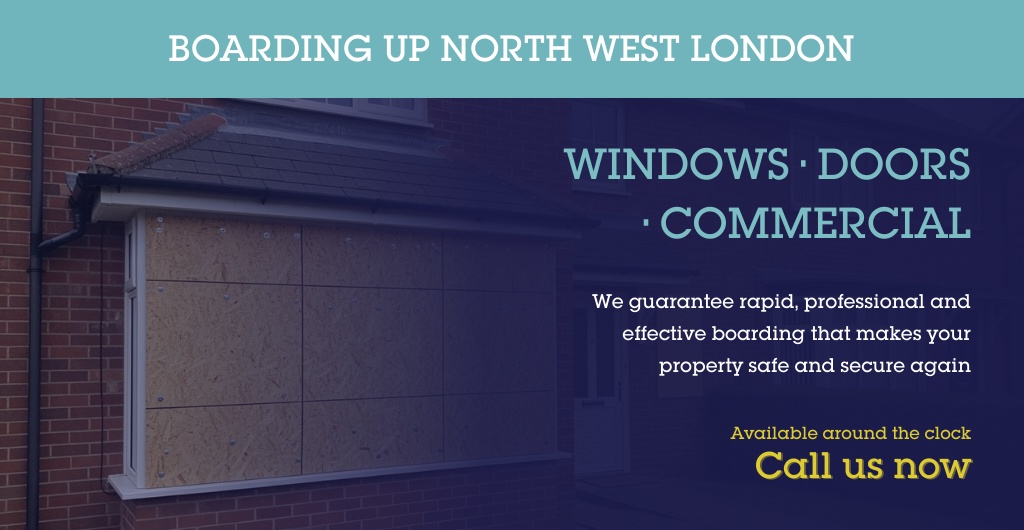
Boarding up is the process of securing a damaged, vulnerable, or exposed part of a building—usually a window, door, shopfront or roof opening—using strong sheets (typically exterior-grade plywood or OSB) fixed in place with security-focused methods. In North West London, boarding up is most often needed after a break-in, vandalism, storm damage, fire, or an accident that leaves glass shattered or an entrance unsafe.
At Boarding Up North West London, we use boarding as a practical, short-to-medium term way to keep people out, keep weather out, and help you stay compliant with insurer requirements until permanent repairs are arranged. If you need urgent help, see emergency boarding up or call 020 4634 7794.
When boarding up is the right solution (and when it isn’t)
Boarding up is ideal when you need immediate security and a safe barrier, but you’re not in a position to complete full repairs straight away—common in busy NW areas where glazing or door replacement can take time to schedule.
Boarding up is usually the right choice if:
- A window is smashed or cracked and can’t be left safely in place
- A door has been forced and the frame is no longer secure
- A shopfront has been hit and you need to secure the premises overnight
- A rooflight/skylight is broken and there’s a weather exposure risk
- The property is vacant or between tenancies and needs temporary security
Boarding up may not be the right approach if:
- The opening can be made secure by a like-for-like repair immediately (for example, an on-site glazing replacement)
- There’s structural movement or severe fire damage that makes access unsafe (we may need to wait for a structural sign-off)
- You specifically require a medium-term, managed solution such as a temporary steel door or security screens (we can advise)
If you’re unsure, a quick call helps. We’ll ask what’s happened, what’s damaged, and whether the property will be occupied—then recommend the safest option.
What gets boarded up? (Windows, doors, shopfronts and roofs)
Different openings need different methods. A ground-floor sash window in West Hampstead is not the same job as a large commercial glazed frontage near Brent Cross or a damaged door to a converted flat above a parade of shops in Kilburn.
Here are the most common boarding-up tasks we handle across NW postcodes:
-
Windows: broken panes, shattered double-glazed units, cracked glass, damaged frames
See window boarding in North West London. -
Doors: forced entry, split frames, damaged locks, insecure rear/side doors
See door boarding in North West London. -
Shopfronts: large commercial glazing panels, smashed display windows, damaged entrances
See shopfront boarding in North West London. -
Roofs and skylights: broken rooflights, storm-damaged access points, vulnerable flat-roof openings
See roof boarding in North West London.
If the building needs perimeter control (for example after an impact or on a site with open access), we may also recommend temporary fencing as a separate measure.
Materials we use (and why)
A proper board-up is only as good as the materials and the fixing method. We choose what to use based on the size of the opening, the risk level, and whether you need security, weather protection, or both.
Common materials include:
-
18mm exterior-grade plywood for higher-security applications and larger openings
Plywood is strong, stable, and performs well where the site may be unattended. -
OSB (often 12mm for smaller openings) where appropriate
OSB can be a practical choice for lower-risk, smaller window openings, depending on the frame condition and fixing points available.
We’ll also consider:
- Internal vs external fixing: internal fixing is often tidier and more secure when access allows; external fixing may be necessary where internal access isn’t possible.
- Anti-tamper fixings: used where there’s a higher risk of interference from outside—important for empty properties or street-facing shopfronts.
- Weather considerations: where rain ingress is likely, we’ll focus on a close fit and secure fixing to reduce drafts and water penetration (without claiming to be a permanent waterproofing system).
If the surrounding frame is too damaged for non-destructive fixing, we’ll explain the options before proceeding. Sometimes the safest method is not the neatest method—but we’ll talk you through it.
What happens when you call us
When something’s gone wrong—especially after a burglary or smashed glass—people usually want two things: clarity and progress. Here’s what the process typically looks like.
-
You call or email with the basics
If it’s urgent, call 020 4634 7794. If it’s not urgent, you can also email us. -
We ask a few practical questions
- What’s been damaged (window/door/shopfront/roof)?
- Is the property occupied right now?
- Is there any immediate safety risk (loose glass, unstable frame)?
- Can you safely send photos?
-
We confirm the approach
We’ll outline the likely method (board type, fixing style, access needs). We don’t promise fixed arrival times—traffic, access and on-site conditions vary—but we prioritise urgent security risks. -
On-site assessment and make-safe
We’ll check the opening, identify safe fixing points, and board up using the appropriate materials. If there’s shattered glass, we work carefully to reduce risk (full debris clearing isn’t always possible within a board-up visit, but we’ll make it safe around the opening). -
Documentation for your records/insurer
Customers typically receive:- A clear work statement
- An itemised invoice
- Time-stamped photos of the secured opening (where possible)
For planned works (such as void property security), see vacant property boarding up for options beyond standard plywood boarding.
Common situations where boarding up is needed in NW London
Boarding up isn’t just for “big incidents”. In North West London’s mix of terraces, mansion blocks, high streets and industrial estates, it can be required for all sorts of events—at all times of day.
After a burglary or attempted break-in
Forced windows and doors often need immediate securing even if the police have attended. Keep your crime reference number and take photos if it’s safe.
Read more: burglary repairs and boarding up.
After vandalism or smashed glass
This might be a street-facing window, a communal entrance panel, or a shopfront. Securing it quickly reduces the chance of repeat damage.
Read more: vandalism repair and boarding up.
After storm damage
High winds can dislodge panes, damage rooflights and expose openings. Boarding up is often a practical “get it secure” step until roofers or glaziers attend.
Read more: storm damage boarding up.
After a fire
Fire damage can leave doors and windows compromised even where the structure remains. We secure the property; we don’t provide smoke/odour remediation.
Read more: fire damage boarding up.
After flooding
Swollen timber, shifted frames and water-damaged doors can create insecure openings. Boarding up may be needed while the property dries and joinery is assessed.
Read more: flood damage boarding up.
After an accident or impact
Vehicle impacts and accidental breakage can leave large, unsafe openings—especially at street level on busier roads.
Read more: accident damage boarding up.
Boarding up vs other security options
Boarding up is often the fastest way to secure an opening, but it’s not the only option. The right choice depends on how long you need security for and how the building is being used.
Boarding up (plywood/OSB)
Best for: immediate, short-term security and weather protection after an incident.
Typical use: broken window/door, smashed shopfront, temporary make-safe.
Temporary steel doors
Best for: when a door is destroyed or the property is likely to be unattended for a while.
Why it matters: a properly fitted temporary steel door is far harder to force than timber boarding and provides a more practical entry solution for authorised access.
Explore wider options in door boarding in North West London.
Security screens (steel)
Best for: void properties and repeated targeting risk.
Why it matters: screens can provide longer-term protection and can be removed/reinstalled as needed.
If you manage empty premises, see vacant property boarding up.
Does boarding up damage frames or brickwork?
Done properly, boarding up should be secure without unnecessary damage—but it depends on the condition of what we’re fixing into.
- If frames and reveals are sound, we’ll use the least invasive secure method that still does the job.
- If timber is rotten, masonry is crumbling, or the opening is distorted (common after forced entry), we may have to use alternative fixing points to ensure it’s safe and secure.
- If there’s a risk that any method could worsen existing damage, we’ll explain that before starting.
Our goal is always: secure first, avoid unnecessary damage, and leave you with clear documentation.
Insurance and boarding up: what you should know
Boarding up is commonly treated as an emergency mitigation step. Insurers typically want to see that you acted promptly to prevent further loss (weather ingress, unauthorised access).
A few practical tips:
- Contact your insurer early and keep a note of who you spoke to.
- Keep any police reference number if it’s a break-in.
- Take photos before boarding up if it’s safe to do so.
- Keep invoices and work notes—we provide itemised paperwork and can supply supporting photos.
We’re not loss adjusters and can’t advise on policy wording, but we can help with the documentation insurers usually request. See insurance claims support for guidance.
Where we work in North West London (NW postcodes)
We cover North West London across the NW postcode area (NW1–NW26), including residential streets, estates, high streets and commercial sites. If you’re checking whether we operate near you, browse areas we cover or view location pages such as:
FAQs about boarding up
How long does boarding up take?
It depends on the size and condition of the opening, access, and whether we’re boarding a single window or multiple points of entry. A straightforward window is often quicker than a damaged door frame or a large commercial frontage. If you describe the damage (or send photos), we can give a realistic expectation.
Is boarding up covered by insurance in North West London?
Sometimes, yes—many policies cover emergency make-safe work, but it varies by insurer and policy type. We recommend checking your policy and keeping all documentation. Our insurance claims support page explains what we can provide.
Can you board up a shopfront out of hours?
Yes—shopfront damage often needs securing the same day or overnight to protect stock and comply with security requirements. Start with emergency boarding up if it’s urgent.
What should I do before the boarding-up team arrives?
If it’s safe:
- Keep people away from broken glass
- Take photos for your records/insurer
- Locate any keys/access details (rear gates, communal doors)
- If it’s a burglary, keep your police reference number to hand
If it’s not safe, wait in a secure place and call us.
Do you also do permanent repairs?
Our focus is securing and making safe—boarding up, temporary security solutions, and helping you stabilise the situation. We can advise on next steps and what to ask a glazier, locksmith or contractor, but permanent reinstatement is typically handled separately.
Helpful links
- emergency boarding up
- boarding up services
- pricing guidance
- insurance claims support
- frequently asked questions
- contact us
Ready to get started? Call 020 4634 7794 or email us for a free, no-obligation quote.
